Intro: How AI impacts Google SEO and changing human search behaviour
You’ve probably heard it—“SEO is dead.”
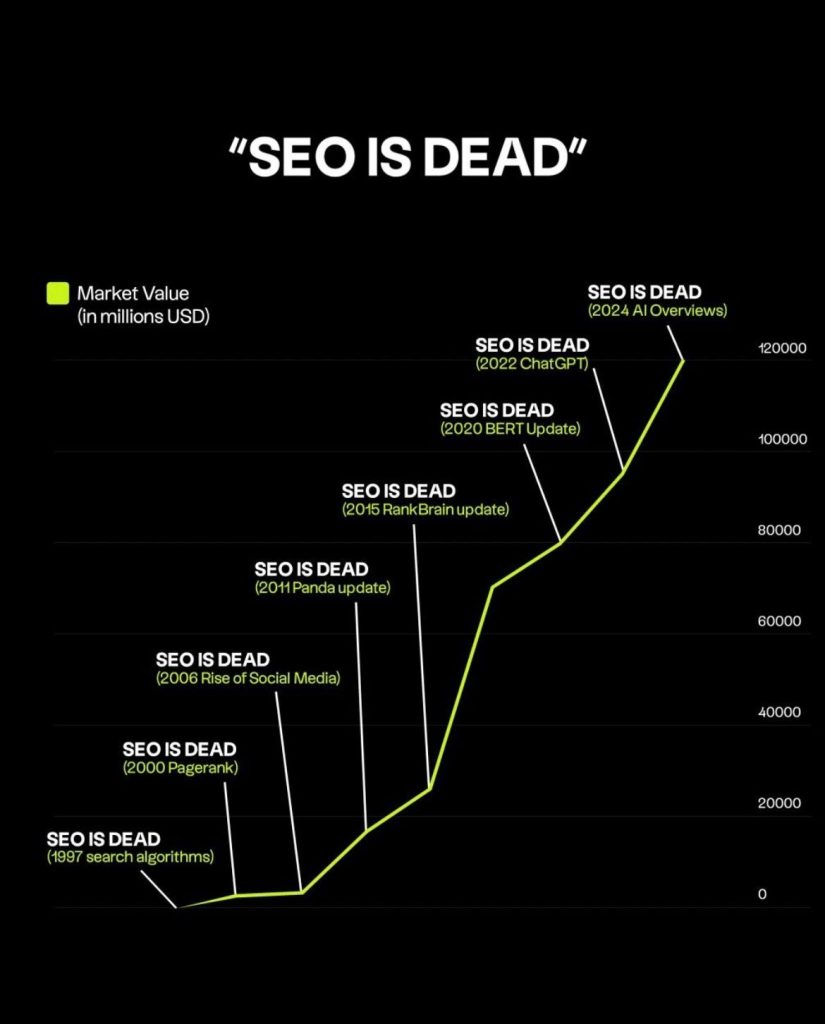
According to data, search volume increased by 21.6% from 2023 to 2024. More people than ever are using Google search.
People who claim it’s dead because many site traffic is dropping, meanwhile new content doesn’t perform like it used to.
The Misconception of SEO Keyword Research and Optimization
More Keyword, More Content, More Traffic — is not a long-term SEO strategy anymore.
I am not saying keywords are useless. Let’s be clear about the role of a keyword.
| What marketer think of keyword | What keyword really is |
Keyword = query High volume keyword = high search query They believe keywords are the exact phrases people type into Google. | Keywords are signals — phrases used to help Google understand the topic/category of your content. They are not just about search volume, but about relevance, intent, and context. |
That said, keywords shouldn’t be the main reference for writing content—even though we often use tools like SEMrush or Ahrefs to research query volume.
Of course, you can still create content by researching a few seed keywords—checking their search volume, difficulty, and competitor pages—and building content around them.
But times have changed.
Google’s algorithm, powered by AI, no longer relies on exact keyword matches. It understands context, user intent, and semantic relationships across content.
What this means is:
- You can rank without using an exact match keyword.
- A single keyword can represent multiple user intents.
- Content that lacks depth or context—even if keyword-optimized—gets outperformed by more comprehensive, user-focused content.
If you keep using the keyword-first method, your content becomes scattered and disconnected. This sends a signal to Google that your site lacks semantics in the long run.
Example of Scattered Keyword Topic within a Site:
“Top 10 kitchen remodel ideas”
“Bathroom renovation cost”
“How to paint a room”
“Best garden furniture”
Before AI, we wrote content based on “keyword-volume” on our site.
With AI, we can now create content around core topics that matter to our target audience —regardless of keyword volume.
Adapting to the New Human Search Behavior
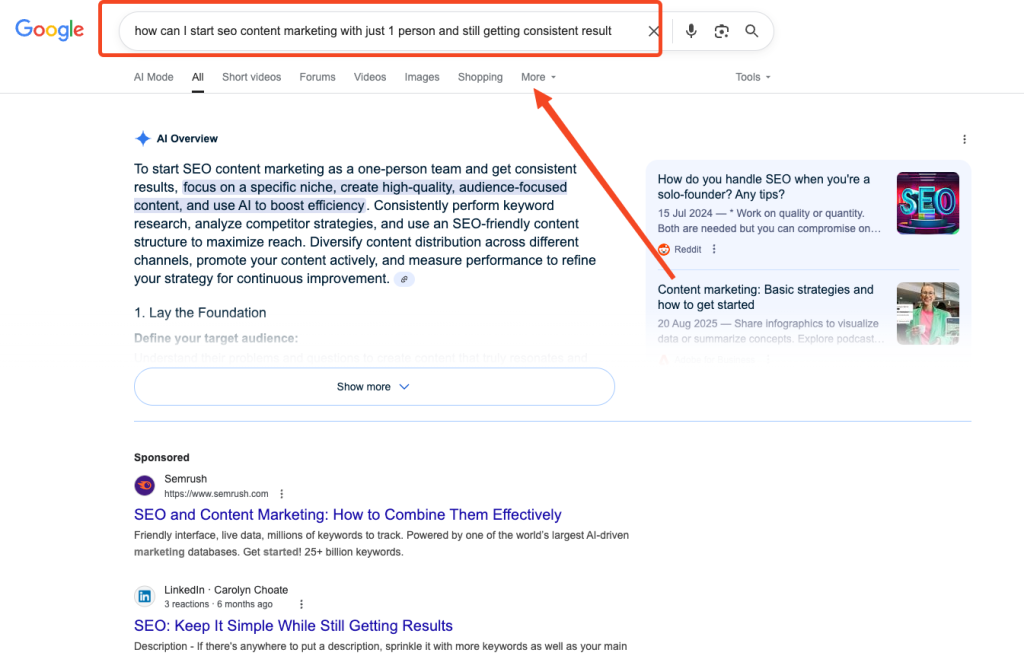
Yes, people still type in fragmented keywords searches, but those are usually impromptu searches with low buying intent.
Think about the last time you research on google before you want to buy something, you don’t just type a keyword. You would probably ask specific longtail queries.
Now, people even type in conversational queries that reflect a much deeper intent.
Example of conversational queries
“How do I assess a contractor work quality for a home renovation?”
“What should I renovate first if I’m on a budget?”
“What are common contractor sourcing mistakes to avoid when remodeling a house?”
To stay relevant, your content strategy should now be focused on user intent. You need to start creating based on Intent-Topic SEO.
Writing with purpose, in-depth information and insight that your audience is really looking for, not just what they’re typing.
Low-to-Zero Search Volume Keywords that Drive More Conversions and Rank Faster
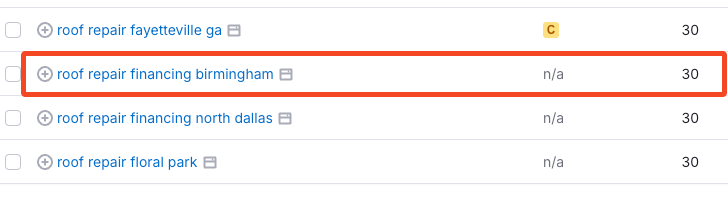
You might be skeptical about writing content with low or no keyword volume.
When it shows a certain keyword has no volume, what it really tells is the volume is nominal. But as soon as Google detects your content is helpful to users, it will drive more impressions to your post.
But make sure you’re focused on high-buying-intent keywords that match what your ideal customer is actively researching before making a purchase.
Eventually the keyword volume starts to grow and YOU OWN the keyword if you started off with zero keyword volume, because you are ahead of the search data.
Those winning posts will now rank for more new keywords. Keep in mind that Google is the source of data, not SEMrush or Ahref.
So, keywords aren’t dead.
Grow Intent-Topic SEO to Fill the Gap of Conversational Query in 2025
SEO Shift: Why Intent-Topic Strategies Are Key to Ranking for Conversational Queries?
The biggest shift today is this:
Marketers should create SEO contents that are focused around core topics closely tied to our product, service, or solution.
More importantly, grounded in the needs of our target audience. Contents of a site should never be scattered.
One topic can contain multiple layers of intent, from persona, problem, and opportunity.
By organizing content around a central topic with supporting subtopics that match different stages of intent, we create semantic depth to Google.
This is not only helps our content rank better in an AI-powered search environment, but also makes it more valuable and trustworthy for real users.
✅ Example 1
Old Way of Content Headline
“Top 10 CRM software”
Content is written in list posts and brief product features without in-depth use cases or experience insight.
Conversational Query Today:
“What’s the best CRM for a startup with under 10 sales reps and no full-time IT support?”
Intent-Topic Content Direction:
- Compare 3–5 CRMs designed for startups
- Show pain points from a founder persona (e.g. limited budget, fast onboarding, non-technical team)
- Include real onboarding timelines, pricing breakdowns, and limitations
- Add data, interview, case study to further add on deeper insight to the audience.
Not just listing CRMs and generic information, but showing how each fits into the startup growth journey, with real-world constraints and decision points.
✅ Example 2
Old Way of Content Headline
“How to Estimate Your Budget to remodel a kitchen”
Content is written at a superficial level without real data like cost ranges or pricing references.
Conversational Query Today:
“How much does it cost to remodel a kitchen in [city] and how to avoid getting ripped off?”
Content Direction:
- Blog post on “Kitchen Remodeling in: What to Expect, Avoid, and Actual Market Rate for in 2025”
- Address real local costs, typical timelines, and buying process
- Break down pricing for different levels (basic, mid-range, premium)
- Provide insight on contractor evaluation
- Include practical usability on material selection
Not a sales pitch, but an in-depth educational guide that helps people to make informed decisions, backed by real experience and use case.
Start Your Intent-Driven SEO at the Bottom-of-Funnel — Where Sales Happen
SEO is a long term game, it takes time to compound. To expedite growth, we encourage starting with bottom-of-funnel content, because those content attract high buying intent audiences.
Forget about the idea of the funnel flow concept. The idea of users moving neatly from TOFU to BOFU rarely matches real behavior.
People arrive from all angles, at different stages, with different needs, and most don’t stick around long enough to be “nurtured.”
So why chase low-intent traffic when you can directly target the high buying intent traffic?
Here are some examples for Bottom-of-Funnel content post that should be first established in Intent-Topic SEO,
- Pain point focused
- Comparison / alternative post
- Best [product] post
- Job-to-be-done post
- How-to post
- Case Study
- Differentiator post
But here’s the key: it shouldn’t be overly salesy, it must be aligned to intent-driven topics that match what your audience with buying intent is actively searching for.
- Every content should answer real questions asked by high-intent users.
- Content is structured around users’ interest and discussion before buying
The easiest way to identify BOF content ideas is to talk directly with your customers or your sales team, “What are their concerns / questions in mind before buying”?
These are the real hidden “conversational Queries” with zero volume.
How to Discover Winning Content for Business SEO Revenue?
Never forget that the goal of SEO is sales. To achieve that, marketers should follow an order of priority roadmap:
[sales in mind] → [understand user intent] → [build topic-first contents] → [use keywords to signal relevance]
In business, SEO should drive sales first, everything else is just support.
- Sales in mind: How do I build content that contributes to sales?
- Understand users’ intent: What are they thinking, asking, or searching before they’re ready to buy?
- Build topic-first contents: Build depth, insight, and relevance.
- Keywords to signal relevance: Not to chase volume, but to signal to Google what your content is about.
To identify which content is actually driving sales, you need a solid dashboard that tracks user behavior across your site.
It’s not enough to just see traffic, you need to understand users’ activities to identify the content journey on your site.
When a specific blog post consistently attracts users who later take key-action, that is a high intent post.
Remember, not all traffic is equal, even if the volume is low. If a piece of content consistently draws in high-intent visitors who convert, it’s worth your attention. That kind of content deserves regular updates, optimization, and pattern replication.
BigQuery GSC + GA4 Raw Data to Monitor SEO content
By far, not one web analytic has the full compatibility to adopt Intent-Topic SEO.
In fact, GSC and GA4 are not designed for SEO optimization.
GSC is useful, but it has major blind spots.
First, it only shows up to 1,000 search queries, even when you have 10,000 search queries data. That means you miss out 90% of the query and can’t fully analyze or group your data for monitoring.
Second, 50% of clicks are hidden under “anonymous queries” due to privacy reasons. This makes it look like some pages have no traffic, even when they do, but leading to bad decisions like removing high-performing pages.
The same goes to GA4.
It has major flaws in user attribution and metrics definitions. You can fix these by creating custom explorations, but it’s not easy.
GA4’s Landing Page Report and User Acquisition Report are not designed for SEO content monitoring. They can’t show you how many first-time organic users were actually attracted by your SEO content.
While Ahref and SEMrush only provide you keyword estimated data.
SEOInsight Explorer — BigQuery Data to Looker Visualization
SEOInsight Explorer is designed specifically for you to monitor your SEO content performance and discover content that drives high intent traffic.
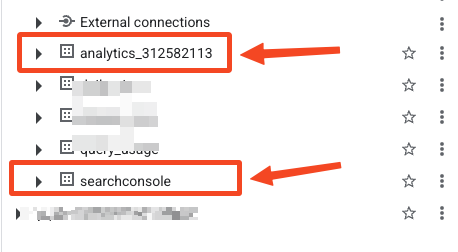
We export GSC and GA4 raw data to BigQuery as data storage, and process them to specifically cater for the metrics and reporting to discover Winning Content in Looker Visualization.
Not only that, it also introduced new insight by transforming isolated GSC data into meaningful actionable insight by joining GA4 user data.